- Home
- Products
- About Us
- Application Cases
- CLIENT & FACTORY
- Test
- News
- Contact Us
Leave Your Message
Choosing Flanged Ball Valves in 2026 requires more than comparing prices, bore sizes, and catalog photographs. Industrial plants now face tighter efficiency targets, aging pipelines, variable media, and stronger expectations for traceability. Fortune Business Insights’ Industrial Valves Market report identifies continued demand from oil and gas, water treatment, chemical processing, and power generation. Its forecasts also indicate steady market expansion through the decade. That growth matters. More options can create more selection mistakes.
A reliable choice begins with service conditions. Record the fluid, temperature, pressure, flow direction, operating frequency, and required shutoff class. Check whether the valve body needs carbon steel, stainless steel, duplex stainless steel, or a lined construction. In a hot process line, a soft PTFE seat may behave differently from a metal seat. Small details matter. Flange ratings must match the piping system, not merely the valve nameplate. ASME B16.5, EN 1092-1, API 6D, and ISO 5211 provide useful reference points for dimensions, pipeline service, and actuator mounting. However, standards do not replace engineering judgment.
Reports from MarketsandMarkets and Grand View Research also highlight automation, water infrastructure investment, and industrial modernization as important valve-market drivers. These trends make actuator compatibility, position feedback, fire-safe design, and emissions control increasingly relevant. Still, every application is different. A technically impressive valve may fail through poor installation, unsuitable seals, or neglected maintenance. This guide examines how to choose Flanged Ball Valves with practical checks, credible standards, and room for honest reconsideration. Because the cheapest selection is not always the lowest-cost solution.
How to Choose Flanged Ball Valves in 2026?
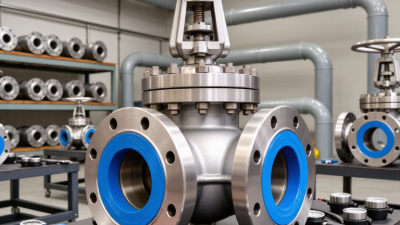
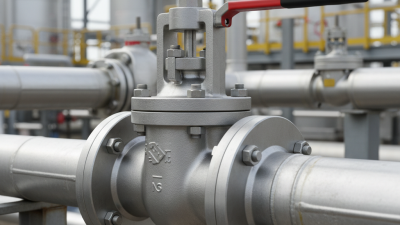
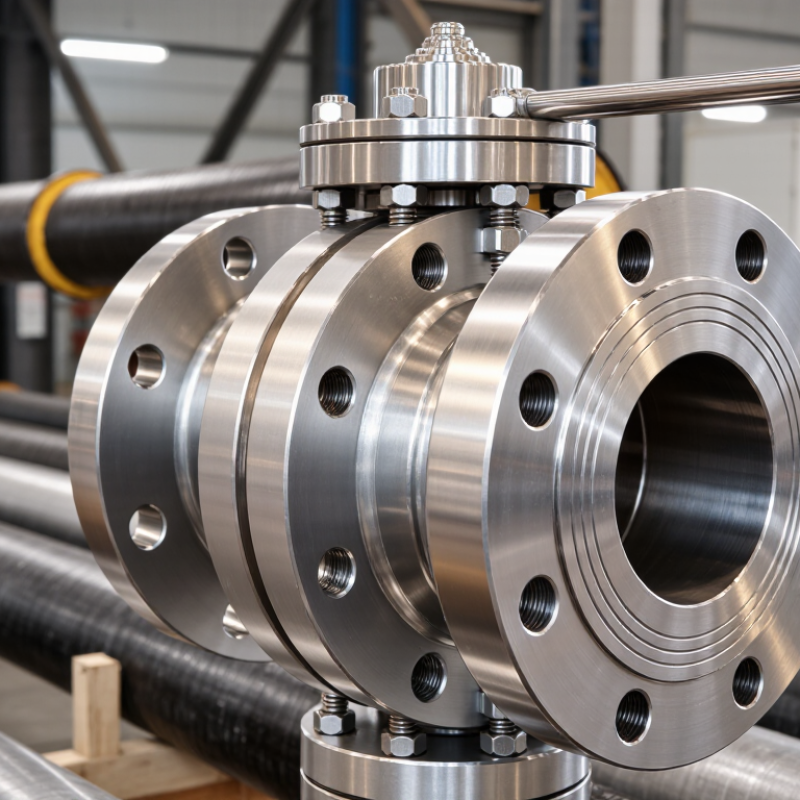
A flanged ball valve uses a drilled ball to control fluid flow. The ball turns 90 degrees inside the body. When the bore aligns with the pipeline, fluid passes with low resistance. When it turns across the passage, flow stops. Flanged ends connect with bolts, gaskets, and matching pipe flanges. This design supports reliable maintenance in water, chemical, energy, and process systems.
According to Grand View Research, the global industrial valves market reached about USD 78.6 billion in 2023. This growth reflects stricter process control and aging infrastructure. However, market growth does not guarantee the right valve for every service. Check pressure, temperature, fluid chemistry, seat material, body material, and valve size. API 6D covers pipeline valve requirements, while ASME B16.5 defines many flange dimensions and pressure classes. A higher class is not automatically better. It may add weight, cost, and installation limits.
Tips: Confirm the flange standard before ordering. Ask for pressure-temperature tables and fugitive-emission test records. ISO 15848 testing can support stem-sealing decisions. For abrasive slurry, a standard soft-seated valve may wear sooner than expected. I have seen drawings look correct, yet gasket access remained poor. Leave enough room for bolt removal and actuator movement. A perfect selection is rare; documented assumptions make the decision safer.
| Selection Area | Option or Parameter | Technical Description | Selection Guidance |
|---|---|---|---|
| Valve Definition | Flanged ball valve | A quarter-turn isolation valve that uses a spherical closure element with a drilled passage. The valve is connected to piping with bolted flanges rather than threaded or welded ends. | Choose it when a bolted, serviceable connection and reliable shutoff are required. |
| Operating Principle | 90-degree rotation | When the ball bore is aligned with the pipeline, the valve is open. Rotating the ball approximately 90 degrees places the solid side across the flow path and closes the valve. | Suitable for fast on/off isolation. It is generally not the first choice for continuous throttling unless specifically designed for control service. |
| Bore Design | Full bore | The flow passage is close to the internal diameter of the connected pipe, which helps reduce pressure loss and allows many line-cleaning or inspection tools to pass. | Select for low pressure drop, piggable pipelines, and applications where flow capacity is important. |
| Bore Design | Reduced bore | The ball passage is smaller than the connected pipe bore. This can reduce valve size, weight, and cost, while creating more flow resistance than a full-bore design. | Consider where compact dimensions and economical isolation are more important than maximum flow capacity. |
| Connection Standard | Flange facing and drilling | Common flange systems include ASME B16.5 for many smaller and medium nominal pipe sizes, ASME B16.47 for larger sizes, and EN 1092-1 for many metric piping systems. Facing types may include raised face, flat face, or ring-type joint. | Match the valve flange standard, pressure class, nominal size, facing, bolt-hole pattern, and gasket type with the mating flanges. |
| Nominal Size | Pipe and valve size | Flanged ball valves are manufactured in a wide range of nominal sizes. The actual available range depends on the design standard, pressure rating, body construction, and service requirements. | Size the valve using required flow rate, allowable pressure loss, line velocity, and the actual pipe dimensions—not only the connection size. |
| Pressure Rating | Class or PN rating | Typical designation systems include ASME pressure classes such as Class 150, 300, and 600, and metric PN ratings such as PN16, PN25, and PN40. Pressure capability changes with temperature and material. | Select a rating that covers the maximum design pressure at the maximum design temperature. Do not compare Class and PN values as exact equivalents without checking the applicable standard. |
| Temperature Range | Process and ambient temperature | The usable temperature range is limited by the body material, ball and stem materials, seat material, seals, and pressure-temperature rating. Soft seats and metal seats have different operating limits. | Verify the complete pressure-temperature chart and confirm minimum, normal, maximum, and any transient temperatures. |
| Body Construction | Cast, forged, or fabricated body | Cast bodies are widely used for general service. Forged bodies can provide high structural integrity and are common in demanding pressure services. Fabricated constructions may be used for special sizes or designs. | Consider pressure class, size, impact risk, inspection requirements, weight, and applicable material standards. |
| Body Material | Carbon steel, stainless steel, or alloy steel | Carbon steel is commonly used for general industrial service. Stainless steel offers improved resistance to many corrosive environments. Alloy materials may be required for high temperature, severe corrosion, or special chemical compatibility. | Select materials based on the process fluid, chloride exposure, corrosion rate, temperature, pressure, and applicable material compatibility data. |
| Ball and Stem | Material and surface finish | The ball and stem must resist corrosion, erosion, galling, and mechanical wear. Surface treatments or hard-facing may be used for abrasive, high-cycle, or severe-service applications. | Match wetted materials to the fluid and review stem torque, cycle frequency, and solids content. |
| Seat Type | Soft seat | Polymer seats can provide tight shutoff and low operating torque for many clean fluids. Their temperature and chemical resistance are limited by the specific seat material. | Use when the temperature, fluid chemistry, fire requirements, and abrasion level are compatible with the selected polymer. |
| Seat Type | Metal seat | Metal-seated designs are intended for higher temperatures, abrasive media, or conditions where soft seats may degrade. They may require more operating torque and may have different leakage expectations. | Consider for high-temperature, erosive, dirty, or severe services. Confirm the required leakage class and shutoff performance. |
| Fire Safety | Fire-safe construction | Fire-safe valves use design features intended to limit external leakage and maintain a defined level of shutoff performance after exposure to fire testing conditions. | Specify fire-safe construction when required by the process risk assessment, industry rules, or project specifications, and request certification to the required test standard. |
| Flow Direction | Bidirectional or unidirectional service | Many standard floating or trunnion-mounted ball valves can isolate flow in either direction, while certain specialized designs, cavity-relief systems, or seat arrangements may impose a preferred flow direction. | Check the flow arrow, cavity-relief arrangement, seat design, and manufacturer installation instructions before commissioning. |
| Ball Support | Floating ball | The ball is not fixed to trunnions and is pushed toward the downstream seat by line pressure. This design is common in smaller and moderate-pressure valves. | Suitable for many general isolation duties. Confirm maximum size, pressure, differential pressure, and operating torque. |
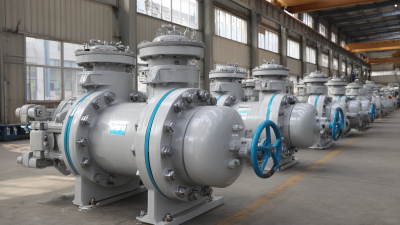
| Ball Support | Trunnion-mounted ball | The ball is supported by upper and lower trunnions, reducing the load transferred to the seats and often lowering operating torque in larger or higher-pressure valves. | Consider for large nominal sizes, high pressure, high differential pressure, or automated operation. |
| Actuation | Manual lever or gearbox | Manual operation uses a lever for smaller valves or a gearbox for larger valves and higher torque requirements. A lockable device can help prevent unauthorized operation. | Use when operation is occasional and the valve is accessible. Check available space, operator force, and emergency access. |
| Actuation | Pneumatic or electric actuator | Actuators enable remote or automatic operation. Pneumatic actuators are commonly used for rapid quarter-turn movement, while electric actuators are useful where instrument air is unavailable or precise positioning is needed. | Size the actuator using the maximum breakaway, running, and reseating torque, including safety margin and service-factor requirements. |
| Leakage Performance | Shutoff and seat leakage | Leakage requirements depend on the valve design, seat material, test medium, pressure, temperature, and specified test standard. Zero visible leakage is not the same as zero molecular leakage. | State the required leakage class or test criterion before purchase and confirm whether it applies to gas, liquid, or both. |
| Maintenance | Inspection and replacement parts | Flanged connections can simplify removal for maintenance. Service requirements may include flange-bolt inspection, actuator checks, stem-seal inspection, seat evaluation, and functional testing. | Choose a maintainable design with accessible parts, documented torque values, suitable spare seals, and an appropriate isolation plan. |
| Applicable Standards | Design, testing, and installation standards | Common references include standards for ball-valve design, flange dimensions, pressure-temperature ratings, shell testing, seat testing, fire testing, and actuator mounting. The required standards depend on the industry and project. | List every mandatory standard in the purchase specification and verify that certificates and test records match the supplied valve. |
| Best-Fit Applications | Isolation service | Flanged ball valves are commonly used in water treatment, HVAC, oil and gas, chemical processing, power generation, compressed gas, and general industrial piping systems. | Confirm fluid compatibility, cleanliness, temperature, pressure, cycling frequency, emissions requirements, and local safety regulations before selection. |