2026 Best Wafer Ball Valve Manufacturers for Global Buyers
Choosing the right Wafer Ball Valve manufacturer can affect plant safety, uptime, and long-term maintenance costs. Global buyers face a crowded market, with suppliers offering similar pressure ratings, materials, and certificates. The differences often appear in details: seat design, stem sealing, machining accuracy, testing depth, and response after delivery.
Peter Smith, a recognized valve engineering author and co-author of Valve Selection Handbook, has emphasized, “The correct valve is chosen by service conditions, not by size alone.” That principle remains practical. A compact stainless-steel Wafer Ball Valve may suit clean water, yet fail prematurely in abrasive slurry or high-temperature chemical service. Product photographs cannot reveal that risk. Neither can a low price.
This 2026 guide examines manufacturers from a buyer’s perspective. It considers production experience, material traceability, pressure testing, quality systems, customization, export capability, and technical support. It also looks beyond polished websites. Factory audits, sample inspections, and clear documentation often reveal more than marketing language. Small details matter.
No ranking is perfect.
Supplier performance may vary by model, batch, and region. Some manufacturers communicate well before purchase but respond slowly when a seal problem appears. Others lack strong branding yet deliver consistent engineering. That is why this guide combines published evidence with practical selection criteria. Buyers should still verify current certifications, applicable standards, lead times, and warranty terms before placing an order. A reliable Wafer Ball Valve partner should make technical facts easy to check, not difficult to question.
Wafer Ball Valve Basics: DN15–DN300 and ASME Class 150–600
2026 Best Wafer Ball Valve Manufacturers for Global Buyers
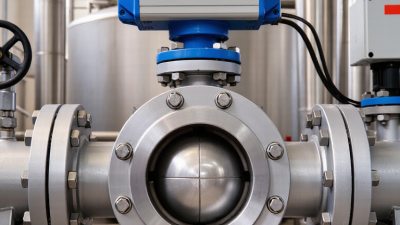
Wafer ball valves sit between pipeline flanges, saving space and reducing installation weight. The DN15–DN300 range covers small instrument lines, utility piping, and many process systems. However, wafer construction is not automatically suitable for every medium. A buyer should check body material, seat compatibility, fire-safe requirements, and leakage testing before comparing prices.
ASME Class 150–600 describes pressure-temperature performance, not a universal bar rating. The allowable pressure changes with material and temperature under ASME B16.34. Class 150 may suit moderate-temperature services, while Class 300 or 600 provides greater pressure margins. Do not select by class alone. Flange dimensions should also match ASME B16.5 requirements, especially around DN200 and larger sizes.
Market data supports careful specification. MarketsandMarkets’ Industrial Valves report estimated the sector at about USD 78.8 billion in 2023, with projected growth to USD 97.8 billion by 2028. That growth increases supplier choice, but it can also hide inconsistent documentation. In practical inspections, I would request dimensional drawings, pressure-test records, material certificates, and cycle-test evidence. ISO 5208 leakage grades help create a common acceptance point. A catalog may look complete. It may still omit the details that matter in the field.
2026 Manufacturer Criteria: API 6D, ISO 15848, and ISO 9001 Certification
For global buyers, choosing a wafer ball valve manufacturer requires more than comparing prices. API 6D certification indicates that the manufacturer follows recognized requirements for pipeline valve design, materials, testing, and documentation. Ask for the certificate scope, not just a logo on a website. Confirm that it covers the exact valve type, pressure class, and production site.
ISO 15848 certification adds an important environmental and safety dimension. It evaluates fugitive emissions from valve stem and body sealing areas. Request test results showing the tested media, temperature range, cycles, and leakage classification. ISO 9001 demonstrates a controlled quality management system, but it does not automatically prove superior valve performance. Check heat numbers, inspection records, pressure-test reports, and final dimensional checks. In practice, paperwork may appear complete while traceability remains weak. That gap deserves attention.
Tips: Ask for current certificates and independent test evidence. Inspect how each valve is marked and packed. Review spare parts control and complaint handling procedures. A reliable manufacturer should explain deviations clearly, even when the answer is inconvenient. Factory experience matters too. Look for documented production records, trained inspectors, calibrated test equipment, and consistent responses from technical staff. Also verify whether the certificate belongs to the actual manufacturing facility. Some buyers overlook this detail. That can create avoidable project delays.
2026 Best Wafer Ball Valve Manufacturers for Global Buyers
Key manufacturer evaluation criteria: API 6D, ISO 15848-1, and ISO 9001
The chart shows the publication year of the editions commonly referenced when evaluating global wafer ball valve manufacturers. API Spec 6D 25th Edition was published in 2021, while ISO 15848-1:2015 and ISO 9001:2015 were published in 2015. Buyers should verify the supplier’s current certificates, scope, validity, and product coverage before placing an order.
Material Comparison: 316L, WCB, PTFE Seats, and Service Limits to 200°C
Selecting the best wafer ball valve manufacturer in 2026 requires more than comparing catalog prices. Material compatibility controls safety, service life, and maintenance frequency. According to API 608 and ASME B16.34, valve design, pressure class, temperature rating, and testing must be assessed together. A neat material chart can mislead.
316L stainless steel offers strong resistance to chloride exposure, moisture, and many chemical fluids. WCB carbon steel is usually more economical for water, air, and non-corrosive industrial service. However, WCB needs suitable coating or corrosion control in wet environments. Published guidance from NACE MR0175/ISO 15156 also shows that material selection changes under sour-service conditions.
PTFE seats provide low friction and reliable sealing across many general applications. Yet, continuous service near 200°C needs careful review. Filled PTFE grades may improve creep resistance, but pressure limits still reduce with temperature. API 608 testing and ISO 15848-1 fugitive-emission classifications help verify performance beyond marketing claims. Ask manufacturers for pressure-temperature curves, seat-material data, helium or air test records, and cycle results. “Up to 200°C” is not a universal promise. I would treat it as a design checkpoint, not a final specification. Slightly higher temperature, frequent cycling, or abrasive media can change the recommendation quickly.
Quality Verification: 100% Shell Testing, API 598 Leakage, and Traceability
For global buyers, the best wafer ball valve manufacturers in 2026 prove quality through repeatable testing, not attractive brochures.
Every valve should undergo 100% shell testing before shipment. Hydrostatic pressure exposes casting pores, wall weakness, and assembly damage. Test pressure, holding time, and results should appear on a controlled inspection record.
API 598 leakage testing
provides another practical checkpoint. Technicians should verify seat and shell performance under defined pressure conditions. A dry valve exterior is not enough. Buyers should request the permitted leakage class, test medium, and calibrated gauge details. Small records matter. So does consistency.
Traceability connects the finished valve to its production history.
Heat numbers should match the body material certificate, machining records, and final inspection report. Serial numbers must remain readable after coating. Photos can help, but they cannot replace original documents. In real purchasing work, paperwork sometimes contains gaps. That weakness deserves honest review, not a polished excuse. A capable manufacturer investigates mismatched numbers, records corrective action, and prevents repeat errors. Factory audits should also examine pressure-test benches, calibration labels, and operator training. This is where experience becomes visible. Reliable suppliers welcome difficult questions and provide evidence without unnecessary delay.
Global Buyer Checklist: MOQ, Lead Time, Incoterms, and Lifecycle Cost
For global buyers, a wafer ball valve quote is only the starting point. MOQ should match demand, certification needs, and spare-valve policy. A 50-piece minimum may look attractive, yet unused stock ties up cash and shelf space. Ask for production lot size, sample rules, and repeat-order pricing in writing. Lead time needs separate dates: approval, manufacturing, inspection, and dispatch. Shorter is not always safer.
UNCTAD’s Review of Maritime Transport reports that shipping carries over 80% of global merchandise trade. Delays therefore affect landed cost quickly. The World Bank’s 2023 Logistics Performance Index estimates 44 days, on average, between port arrival and final delivery, representing about 60% of total trade time. Request a realistic shipping window, not a best-case promise. Under Incoterms 2020, compare FCA, FOB, CIF, and DAP carefully. Insurance responsibility, import clearance, and risk transfer can change the final price.
Lifecycle cost deserves a separate worksheet. Include purchase price, freight, duties, installation, actuator compatibility, inspection, spare seats, and downtime exposure. Specify pressure testing under ISO 5208 and fugitive-emission requirements under ISO 15848 when relevant. Ask for material certificates and traceability records. A cheaper valve may fail this review. My own purchasing reviews have sometimes underestimated commissioning labor; that mistake is easy to repeat. Calculate cost per operating year, not only cost per unit.