Leave Your Message

How to Choose Ball Valve Wafer Type in 2026?

Choosing a Ball Valve Wafer Type in 2026 requires more than comparing purchase prices. Industrial facilities now face stricter leakage expectations, fluctuating energy costs, and more demanding automation requirements. Grand View Research estimates that the global industrial valves market will continue expanding through 2030, supported by water treatment, chemical processing, energy, and manufacturing investments. Fortune Business Insights also projects steady growth in the global ball valve market. However, published estimates differ because researchers define market segments differently. That difference deserves attention.

The practical question is simple: will the valve match the pipeline, medium, pressure, temperature, and maintenance plan? A wafer-style ball valve saves installation space and usually weighs less than a flanged design. Its short face-to-face length can simplify replacement inside crowded pump rooms. Yet, it depends heavily on correct alignment and suitable mating flanges. Small details matter. A damaged seat, unsuitable elastomer, or poorly selected body material can cause early leakage. API 608 and ISO 17292 provide useful reference points for metal ball valve design, testing, and performance. They do not replace engineering judgment.

This guide examines how to select Ball Valve Wafer Type for real operating conditions in 2026. It considers full-port and reduced-port designs, manual and automated actuation, fire-safe needs, pressure classes, and media compatibility. A checklist alone may mislead. Field experience shows that valve failure often begins with overlooked installation conditions, not the catalog specification. Confirm the line standard, verify the actual operating temperature, and review the manufacturer’s test documentation. The best choice is not always the most advanced one. It is the one that remains safe, serviceable, and economically reasonable after years of cycling.

How to Choose Ball Valve Wafer Type in 2026?

What Is a Wafer-Type Ball Valve?

How to Choose Ball Valve Wafer Type in 2026?

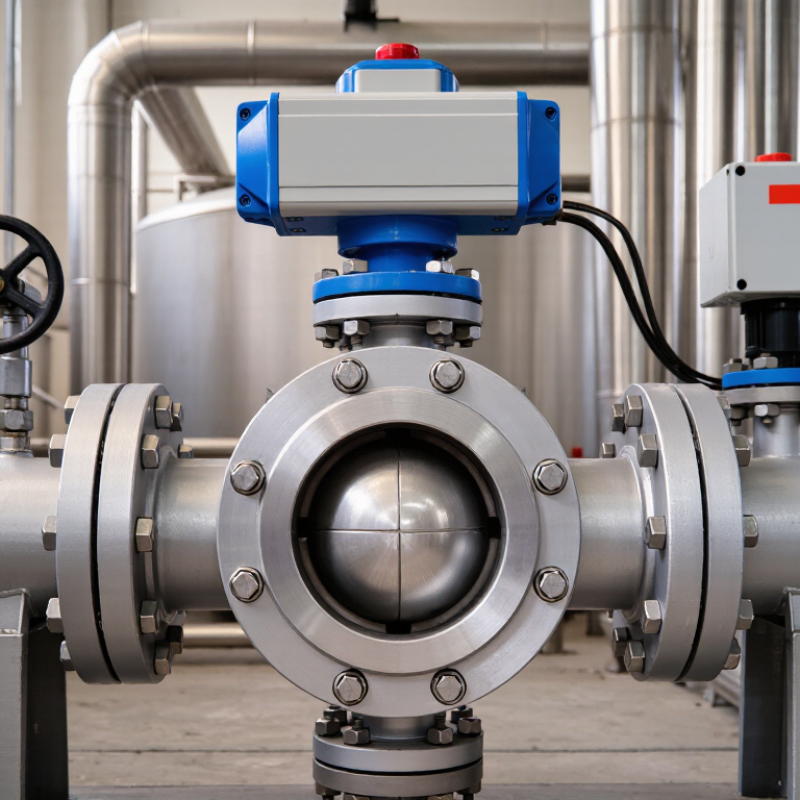
A wafer-type ball valve is a compact shut-off valve installed between two pipe flanges. Its body has no long, separate end connections. Instead, bolts clamp the valve between the flanges, reducing face-to-face length, weight, and installation space. Inside, a drilled ball rotates 90 degrees to start or stop flow. Simple in concept. Precise in operation.

Industry data supports this compact design trend. Grand View Research estimated the global industrial valves market at over 75 billion U.S. dollars in 2023, with steady growth expected through 2030. MarketsandMarkets also forecasts continued expansion in the ball valve segment through 2028. These reports do not prove every wafer valve is suitable. They show why compact flow-control equipment remains important in water treatment, HVAC, chemical processing, and energy systems.

From field experience, selection should begin with pressure, temperature, media, and pipe size. Check the body rating, seat material, stem design, and flange standard. Installation also matters. Poor alignment can twist the body or damage the seats during tightening. A wafer valve may not support every dead-end service, so verify the manufacturer’s technical documentation and applicable standards, such as ISO 5752 or API 608. I have seen compact valves chosen only for their low price. That decision often ignores maintenance access. The shorter body saves space, but nearby bolts and actuators still need room.

How to Match Valve Materials With the Process Medium

How to Choose Ball Valve Wafer Type in 2026?

Selecting a wafer-type ball valve starts with the process medium, not the valve size. In field inspections, I have seen suitable bodies fail because the seat material was overlooked. A clear liquid may be harmless at room temperature, yet become aggressive when heated. Record the medium’s temperature, pressure, concentration, viscosity, and flow speed before comparing materials.

For water and many general fluids, stainless steel bodies with PTFE seats often provide practical corrosion resistance. Strong acids, chlorides, and solvents require closer evaluation. Duplex stainless steel or specialized alloys may resist certain chemicals better, but no alloy suits every condition.

Seat and seal materials need equal attention. PTFE handles many chemicals, while reinforced polymers can perform better under higher temperature or pressure. Elastomer seals must match the medium, or they may swell, harden, or lose sealing force.

Abrasive slurry changes the decision again. Metal seats can tolerate particles better than soft seats, but they may require higher operating torque. The ball, stem, body, and seat should be checked as one system. Do not rely only on a general compatibility chart. Verify concentration limits, thermal cycling, permeation risk, and cleaning chemicals with technical data. A small sample test can reveal problems that paperwork misses. That extra step feels slow. It is often cheaper than replacing a leaking wafer valve during production. Always confirm the final selection against pressure, temperature, and installation conditions.

How to Select the Right Size, Pressure, and Temperature Rating

How to Choose Ball Valve Wafer Type in 2026?

Selecting a wafer-type ball valve begins with the actual flow requirement, not the pipe diameter alone. Check the medium, flow rate, velocity, and acceptable pressure drop. A full-port valve usually reduces restriction, while a reduced-port design may suit limited space or lower flow demands. Measure twice. A valve that matches the pipe can still be hydraulically undersized.

Pressure rating requires careful comparison. Review the valve rating, flange class, bolt pattern, and weakest connected component. Ratings may decline as temperature rises. For steam, hot oil, or outdoor piping, use the design pressure and the highest credible temperature, not the normal operating figures. Confirm pressure-test records and applicable standards before installation. Labels alone are not enough.

Temperature selection also depends on the ball, body, stem seals, and seat material. A metal body may tolerate heat, but a soft seat can deform, leak, or harden. Consider cold starts, cleaning cycles, thermal expansion, and sudden temperature changes. In practical inspections, these transitions are often overlooked. I would also verify actuator torque under the real differential pressure, especially after long idle periods. The neatest specification can still fail when media properties, flange alignment, or maintenance access were assumed incorrectly. Keep it realistic.

How to Choose Ball Valve Wafer Type in 2026? - How to Select the Right Size, Pressure, and Temperature Rating

Use the following guide to narrow down a wafer-type ball valve specification. The values are commonly used engineering ranges for industrial service; the final selection must be checked against the applicable valve standard, pipe standard, media compatibility, pressure-temperature chart, and manufacturer test documentation.

Wafer Ball Valve Selection Data
Selection Dimension Typical Data or Range Recommended Selection Engineering Consideration
1. Nominal Size Selection
Small process and utility lines DN15–DN50; NPS 1/2–2 Select the same nominal size as the connected pipe unless a calculated restriction is required. Check the actual inside diameter, reduced-port design, end-to-end dimensions, and flange compatibility.
General industrial piping DN65–DN150; NPS 2 1/2–6 Use the line size when the valve is intended for isolation or on/off service. Wafer valves are installed between flanges, so verify flange outside diameter, bolt-circle diameter, bolt-hole count, and available face-to-face space.
Large piping systems DN200–DN300; NPS 8–12 Use a full-port or appropriately sized reduced-port valve based on the required flow capacity. Consider actuator torque, valve weight, pipe support, flange alignment, and pressure drop before finalizing the size.
Full-port requirement Port diameter approximately equal to the connected pipe bore Choose full port for low pressure loss, pigging, solids-sensitive service, or high-flow applications. Full-port valves are usually larger, heavier, and more expensive than reduced-port designs.
Reduced-port requirement Port diameter smaller than the connected pipe bore Choose reduced port when compact size, lower cost, or acceptable pressure loss is more important than maximum flow area. Confirm the Cv, pressure drop, velocity, and potential erosion for the intended flow rate.
2. Pressure Rating Selection
Low-pressure utility service PN10 or PN16; approximately 10 or 16 bar nominal pressure at the reference temperature Suitable for many water, HVAC, compressed-air, and general utility applications when the piping system is rated accordingly. PN is a nominal designation, not a constant allowable pressure at every temperature. Use the valve pressure-temperature chart.
General industrial service PN25 or PN40; approximately 25 or 40 bar nominal pressure at the reference temperature Select when the design pressure, surge allowance, and piping class exceed PN16 requirements. Do not select a higher pressure class only by nominal pressure; verify body material, wall thickness, seat rating, flange standard, and test pressure.
ASME Class 150 systems ASME Class 150; pressure-temperature rating depends on material and temperature Use with ASME B16.5 or B16.47 flange systems where the valve drilling and dimensions are compatible. Class 150 is not equivalent to a fixed 150 psi working pressure. Allowable pressure decreases as temperature increases.
ASME Class 300 systems ASME Class 300; pressure-temperature rating depends on material and temperature Use for higher-pressure piping when the complete system, including flanges and bolting, is designed for Class 300 service. Confirm that the wafer valve body and seats are rated for the required pressure at the maximum operating temperature.
Design-pressure rule Valve allowable pressure should be equal to or greater than the system design pressure Use: selected rating ≥ design pressure, including foreseeable pressure surges. Account for pump shutoff pressure, water hammer, thermal expansion, blocked-in liquid, and relief-valve settings.
Hydrostatic shell test Commonly 1.5 times the rated pressure for the pressure-containing shell under API 598 practice Verify the applicable inspection and test standard before acceptance. Shell test pressure is a test condition, not the permitted continuous operating pressure. 3. Temperature Rating Selection
Water and general ambient service Approximately −20°C to +80°C; −4°F to +176°F Use a compatible elastomer or PTFE-based seat after checking the medium and minimum temperature. Low-temperature limits can be controlled by the seat, stem seals, body material, or external actuator components.
Standard PTFE seat Common working range approximately −29°C to +180°C; −20°F to +356°F Suitable for many corrosive chemicals, water, hydrocarbons, and clean process fluids within the compatibility limits. PTFE can creep under load and may not be suitable for high-cycle service, abrasive particles, or every molten chemical.
Reinforced PTFE seat Common working range approximately −29°C to +200°C; −20°F to +392°F Consider when improved dimensional stability and wear resistance are required compared with standard PTFE. Actual limits depend on the reinforcement, pressure, cycling frequency, and fluid compatibility.
PEEK seat Common working range approximately −29°C to +260°C; −20°F to +500°F Consider for higher-temperature, high-pressure, or wear-sensitive service when the seat design is specifically qualified. PEEK is not universally compatible with all chemicals and may require special torque and operating procedures.
Metal-seated design Often selected above approximately +200°C, subject to the valve design Use for high-temperature, abrasive, dirty, or fire-safe applications where soft seats are unsuitable. Metal seats generally provide tighter tolerances rather than soft-seat bubble-tight shutoff; leakage class and thermal expansion must be confirmed.
Low-temperature service Below −29°C; cryogenic service may be below −100°C Specify low-temperature materials, qualified seals, suitable stem extensions, and a valve design tested for the required temperature. Standard wafer ball valves should not be assumed suitable for cryogenic service without documented qualification.
Temperature derating Allowable pressure normally decreases as operating temperature rises Select the rating from the pressure-temperature table at the actual maximum operating temperature. The lowest-rated component—body, seat, stem seal, flange, gasket, or bolting—controls the complete assembly.
4. Body, Seat, and Service Compatibility
Body material Carbon steel, stainless steel, ductile iron, or other qualified alloys Match the body material to corrosion resistance, temperature, pressure, fire requirements, and external environment. Body compatibility alone is insufficient; trim, stem, seat, gasket, and bolting must also be compatible.
Clean liquids and gases Water, air, nitrogen, many hydrocarbons, and compatible chemicals Use a soft-seated ball valve when the temperature and chemical compatibility allow it. Check oxygen-clean, hydrogen, fuel-gas, and hazardous-area requirements where applicable.
Abrasive or particle-laden media Slurry, powder, wastewater solids, or contaminated process fluids Consider a metal-seated or specially protected design, subject to an application review. Particles can damage soft seats, increase operating torque, and prevent tight shutoff.
Fire-safe service Hydrocarbon and other flammable-fluid systems Specify a valve tested and certified to the required fire-safe standard, such as API 607 or API 6FA where applicable. Fire-safe construction does not replace correct pressure, temperature, emissions, and material selection.
5. Installation and Verification Checklist
Flange compatibility EN 1092-1, ASME B16.5, or another specified flange standard Match nominal size, pressure class, facing, bolt pattern, gasket type, and flange thickness. Never force misaligned flanges together through the valve; excessive pipe stress can damage the body or seats.
Flow direction Many two-way ball valves are bidirectional, but some designs have a preferred direction Follow the body arrow or installation instructions when a preferred flow direction is specified. Correct orientation can be important for cavity pressure relief, single-piston effects, and specialized seat designs.
Leakage requirement Soft seats commonly target very low leakage; metal seats may use a specified leakage class State the required shutoff class and test standard in the purchase specification. Verify ISO 5208, API 598, or the project-specific test requirement rather than relying on the phrase “zero leakage.”
Actuator sizing Actuator torque must exceed maximum breakaway, running, and shutoff torque Size the actuator using the valve torque curve, differential pressure, seat material, temperature, and safety factor. For automated valves, confirm air pressure, electrical supply, fail position, cycle time, accessories, and hazardous-area classification.
Important: The pressure and temperature figures shown above are typical engineering selection ranges, not universal guarantees. Always use the certified pressure-temperature rating for the exact wafer ball valve construction, body material, seat material, nominal size, flange standard, and operating medium.

Which Port Design, Connection, and Actuation Options Fit Best?

Choosing a wafer-type ball valve in 2026 starts with the port design. A full-port valve keeps the flow passage close to the pipe’s internal diameter. It suits systems where pressure loss, cleaning, or pigging matters. A reduced-port valve can lower cost and weight. However, its smaller passage may increase velocity and turbulence. Check the actual flow rate, fluid viscosity, and available pump pressure before deciding.

Connection details deserve equal attention. Wafer valves fit between flanges and save installation space, but flange alignment must be accurate. I have seen a well-selected valve leak because the pipe centerlines were slightly offset. Verify flange standards, face dimensions, gasket compatibility, and bolt length. The valve body should also tolerate the operating temperature and pressure, not merely the line’s normal rating. A small mismatch can become expensive.

Actuation depends on operating frequency, access, and failure risk. A lever works well for occasional manual isolation. Gear operation provides better control on larger sizes. Pneumatic actuators respond quickly and suit repeated cycling, while electric actuators help when wiring and precise positioning are available. Specify fail-open or fail-closed behavior only after reviewing the process hazard. That decision is often rushed. It should not be.

Consider shaft orientation, mounting clearance, maintenance access, and signal feedback. For corrosive or abrasive media, confirm seat and seal materials with real fluid data. General compatibility charts can mislead. My own preference has changed: the cheapest actuator is rarely the lowest-cost choice after installation. A practical selection balances flow capacity, connection accuracy, actuation reliability, and future servicing.

How to Evaluate Standards, Safety, Maintenance, and Total Cost

Choosing a wafer ball valve in 2026 requires more than matching pipe diameter. In field reviews, I check media, temperature, pressure, cycling frequency, and flange alignment before price. API 608 supports metallic ball-valve requirements, while ISO 5208 defines leakage tests. ISO 5211 matters when an actuator is planned. A lower-cost valve can fail early when its seat material conflicts with chemicals or thermal cycling. That mistake is common.

Safety evaluation should connect standards with evidence. Request pressure-temperature charts, fire-safe test records under API 607 where applicable, material certificates, and traceable factory test results. EN 12516 helps assess industrial valve pressure design. The International Energy Agency’s Energy Efficiency 2023 report placed industry at about 37% of global final energy demand. Small operating losses deserve attention. Actuator sizing, seal friction, and shutoff performance can affect energy use and emissions. Lifecycle cost should include installation space, downtime, spare seats, inspection labor, and disposal. Purchase price is only one line.

Tips: Compare three offers using identical duty points. Ask for cycle-life data, not vague “heavy duty” claims. Check whether the wafer body fits existing flanges. Calculate five-year cost under real cycling conditions. Keep a contingency for incomplete maintenance records. Revisit the choice after six months. That review may expose an assumption nobody challenged.