China Top Screwed Ball Valve Manufacturers for Global Buyers begins with a practical question: who can deliver reliable control, not merely low prices? A Screwed Ball Valve may look simple, with its compact body and threaded ends. Yet material grade, thread accuracy, seat compatibility, and pressure performance determine its service life.
Philip L. Skousen, a recognized valve-industry author, wrote, “Valve selection must match the service, not merely the pipe size.” This principle remains valuable for global buyers. A manufacturer should explain whether the valve suits water, air, oil, gas, or corrosive media. It should also provide clear pressure ratings, temperature limits, and connection standards. Details matter.
Strong Chinese manufacturers usually support production with documented inspections, traceable materials, and pressure testing. Buyers should request test reports, dimensional drawings, sample photographs, and factory audit evidence. A polished website proves little. A clean test bench proves more. Ask how the supplier controls thread tolerances and checks seat leakage before shipment.
Some suppliers offer stainless steel, carbon steel, brass, or customized configurations. The right choice depends on operating conditions, not appearance. A bright finish can hide weak internal components. That mistake is easy to make.
No shortlist is perfect. Supplier claims still require verification. Buyers should compare response quality, technical knowledge, packaging, lead times, and after-sales support. A dependable Screwed Ball Valve manufacturer will welcome precise questions. It will not avoid them. This guide examines leading Chinese suppliers through those practical standards, helping international purchasers make more informed and defensible sourcing decisions.
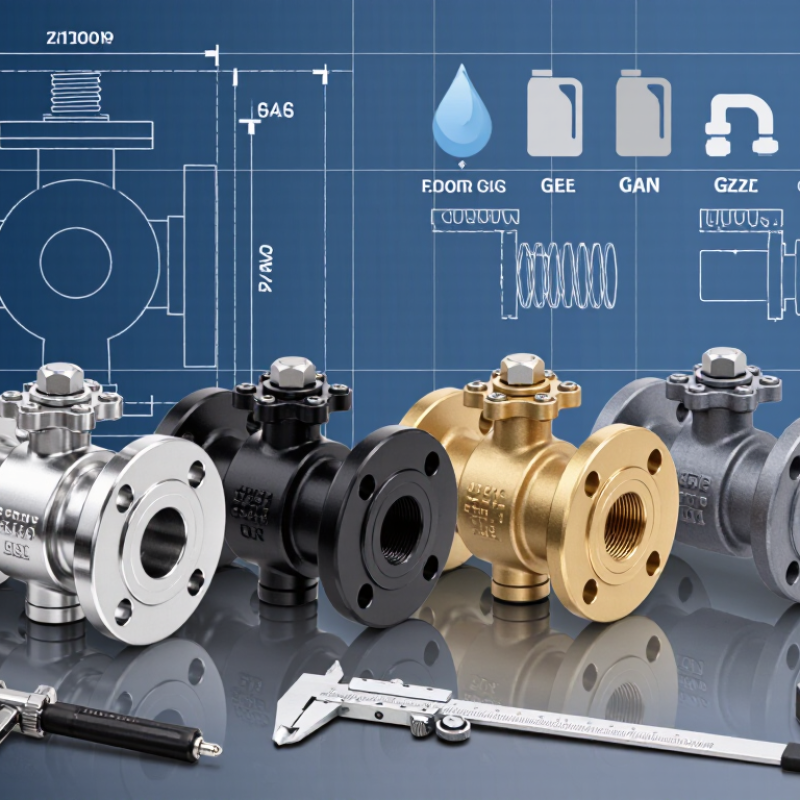
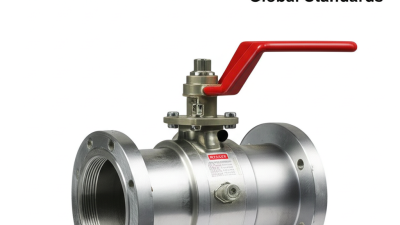
A screwed ball valve is a compact shut-off valve with threaded pipe connections. Its internal ball contains a drilled passage for fluid flow. Turning the handle one quarter-turn aligns or blocks that passage. The design provides quick isolation for water, air, oil, and many compatible process fluids. It is commonly used where space is limited and frequent removal may be useful.
The valve body may contain brass, stainless steel, carbon steel, or engineered plastic. Seat materials affect temperature resistance, chemical compatibility, and sealing performance. Thread standards must match the piping system, such as NPT or BSP. Mixing them can damage threads and create unreliable joints. Use suitable thread sealant, but keep excess material away from the flow path. It is compact. It is not generally intended for precise throttling.
During installation, experienced technicians support the pipe and tighten the valve without twisting the body. Over-tightening can distort soft seats or crack smaller fittings. A common mistake is judging quality only by the handle movement. I also inspect thread engagement, packing adjustment, pressure rating, and visible leakage after installation. Leaks often start there. Selecting a screwed ball valve requires checking fluid temperature, pressure, corrosion risk, connection size, and maintenance access. The fitting is not foolproof, and field conditions can expose assumptions that looked reasonable on paper.
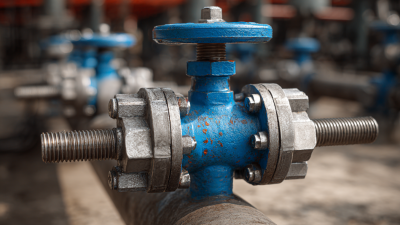
Screwed ball valves control flow with a drilled sphere inside the valve body. A quarter-turn of the stem rotates the sphere. When the bore aligns with the pipe, fluid passes through freely. When the bore turns sideways, the valve blocks the passage. Polymer seats press against the sphere and help create a tight shutoff. The movement is quick and easy to verify. Quite practical.
Installation quality matters. The valve’s internal and external threads must match the connected pipe. Common thread types include NPT and BSP, but they are not interchangeable. Apply a suitable sealing material carefully. Excess sealant can enter the flow path or damage the threads. Use a wrench on the valve body, never on the stem. Not the stem. After installation, inspect every joint and perform a controlled pressure test. A dry connection may still leak later.
Screwed ball valves are widely used in water lines, compressed air systems, heating equipment, and process piping. Their compact size suits plant rooms, workshops, and equipment panels. They work best as isolation valves, not flow regulators. Partly opening the ball can create turbulence and wear the seats. That common shortcut deserves reconsideration. Temperature, pressure, fluid compatibility, and maintenance access should guide selection. For combustible gas service, use properly certified valves and follow applicable local requirements. Experiences in the field show that small thread errors often cause larger failures.
For global buyers, standards matter more than a polished catalog. International Trade Centre data places China among the major exporters under HS 848180, a broad valve category. Competition is intense. China-made screwed ball valves should meet ASME B1.20.1 or ISO 7-1 for thread dimensions. These standards reduce installation mismatch. API 608 addresses metal ball valve design and testing. ASME B16.34 supports pressure-temperature rating checks. “Industrial grade” is not enough evidence.
Request material certificates, dimensional drawings, and serial-linked test reports for every order. ISO 5208 and EN 12266-1 provide recognized leakage-testing frameworks. Reports should state the test medium, pressure, duration, and measured leakage. For stainless steel bodies, confirm the grade, heat number, and traceability. For carbon steel valves, verify coating thickness and corrosion protection. A supplier may quote PN40 or Class 300 without explaining temperature limits. That deserves attention. Thread sealant compatibility also matters in chemical service. Practical failures often involve misalignment, excessive torque, or contamination. The specification can still miss field conditions.
Tips: Compare certificates with random samples, not only PDFs. Measure thread pitch with a gauge. Check handle stops manually. Repeat pressure tests through an independent laboratory when risk is high. Keep one sample valve for future comparison. Cheap valves may pass basic tests yet age poorly. That possibility should not be ignored.
| Evaluation Dimension | Common Specification for Screwed Ball Valves | Applicable Standard or Reference | Buyer Verification Point |
|---|---|---|---|
| Valve Size | DN8–DN100; commonly supplied as 1/4 in to 4 in threaded valves | ISO 6708 for DN designation; ASME B16.10 may be used for face-to-face reference where applicable | Confirm nominal size, port diameter, connection dimensions, and whether the valve is full-port or reduced-port |
| Thread Type | NPT, BSPT, or BSPP; female-to-female is the most common configuration | ASME B1.20.1 for NPT; ISO 7-1 / EN 10226-1 for pressure-tight taper threads; ISO 228-1 for parallel pipe threads | Do not treat NPT and BSP threads as interchangeable; specify thread standard, size, and tolerance on the purchase order |
| Body Material | Brass, stainless steel such as CF8M/316 equivalent, or carbon steel such as WCB | ASTM A351 for cast austenitic stainless steel; ASTM A216 for cast carbon steel; EN 12165 for wrought copper alloys | Request material certificates, chemical composition, heat number traceability, and confirmation of corrosion suitability |
| Ball and Stem Material | Usually stainless steel or plated brass; anti-blowout stems are preferred for industrial service | Material selection should follow the valve manufacturer's design standard and service requirements | Check ball finish, stem retention, anti-static design where required, and compatibility with the medium |
| Seat and Seal Materials | PTFE, reinforced PTFE, RPTFE, or engineering polymers; elastomers may be used for stem seals | Temperature and chemical compatibility should be assessed using the material supplier's data | Verify operating temperature, fluid compatibility, pressure differential, fire-service requirements, and required seal configuration |
| Pressure Rating | Common catalog ratings include PN16, PN25, PN40, or 600 WOG; the actual rating depends on design, size, and temperature | ASME B16.34 may be used for industrial valve pressure-temperature ratings; EN 12516 may apply to European designs | Compare the pressure-temperature chart rather than relying only on a nominal WOG or PN marking |
| Pressure and Leakage Testing | Hydrostatic shell testing and seat leakage testing are normally required before shipment | ISO 5208 or API 598 may be specified for pressure testing and leakage acceptance | Request test pressure, test duration, acceptance level, inspection records, and sampling or 100% testing requirements |
| Flow Direction and Port Design | Two-way isolation service; full-port designs reduce pressure loss, while reduced-port designs are more compact and economical | Design requirements should be defined in the technical datasheet and project specification | Confirm flow coefficient, pressure drop, allowable velocity, and whether throttling service is permitted |
| Actuation and Handle | Manual lever handle with 90-degree quarter-turn operation; lockable handles are available for many designs | ISO 5211 is commonly referenced for actuator mounting pads on compatible valve designs | Check operating torque, handle clearance, locking arrangement, actuator interface, and cycle-life requirements |
| End-to-End and Installation | Compact threaded construction supports installation in water, air, oil, gas, and general industrial piping when materials are suitable | Applicable piping code, thread standard, and local installation regulations govern system integration | Confirm sealant requirements, wrenching method, pipe alignment, installation space, and maintenance access |
| Traceability and Documentation | Typical documents include datasheet, dimensional drawing, material declaration, pressure test report, and packing list | Documentation should match the purchase specification and applicable regulatory requirements | Require consistent model coding, batch identification, inspection records, certificates, and export packaging details |
China’s leading screwed ball valve manufacturers serve water treatment, compressed air, heating, and light industrial systems worldwide. Grand View Research valued the global industrial valves market at approximately USD 77.7 billion in 2023. It also forecasts continued growth through 2030, supported by infrastructure and process-industry investment. This demand increases pressure on Chinese manufacturers to provide more than competitive pricing.
A reliable supplier should show traceable material certificates, thread specifications, and pressure-test records. Common options include stainless steel, carbon steel, and brass bodies. Buyers should verify BSP or NPT threads before production approval. Mismatched threads create leakage, even when the valve looks perfectly machined. ISO 5208 provides a useful reference for valve pressure testing, while ASME B1.20.1 helps confirm NPT thread requirements.
Factory evaluation needs practical evidence. Ask for shell-test pressure, seat-test pressure, operating-temperature limits, and sample inspection reports. A 2024 industrial valves study by MarketsandMarkets identifies oil and gas, water infrastructure, and chemical processing as major demand areas. However, screwed valves are not automatically suitable for every aggressive medium. Seal material, cycle frequency, and installation torque still matter. The weak point is often documentation, not machining. I would not treat a polished catalog as proof. A small sample order, dimensional inspection, and independent leak test can reveal inconsistent threads or uneven sealing surfaces before a larger shipment.
Global buyers should evaluate Chinese screwed ball valve suppliers through evidence, not catalogue claims. The 2023 World Bank Logistics Performance Index gave China a score of 3.7 out of 5. Delivery capability is strong, but logistics performance does not prove valve quality. Ask for material certificates, pressure-test records, dimensional reports, and traceable heat numbers. Each document should match the exact production batch.
Technical review must cover more than price. Check compliance with ISO 17292, API 6D, ASME B16.34, or the standard required in your market. Confirm body material, seat composition, thread accuracy, pressure rating, and operating temperature. Request samples from normal production, not specially prepared units. A clean sample can mislead.
Audit the factory’s process controls. Review calibration dates, nonconforming-product records, and final inspection procedures. ISO’s 2022 Survey reported over one million ISO 9001 certificates worldwide, yet certification alone cannot guarantee reliable valves. It shows a management framework, not perfect manufacturing. The 2023 World Bank report also ranked China 19th for logistics, which supports export capability but says little about leakage performance. Consider independent testing for fugitive emissions and cycle life. This costs more initially. It may prevent a costly field failure. A supplier with lower prices may still be the weaker choice when traceability is incomplete. Supplier evaluation is never perfectly objective, and buyers should regularly question their own scoring model.