How to Choose the Right Trunnion Mounted Valve for Your Project?
Choosing the right Trunnion Mounted Valve (TMV) is crucial for project success. According to a recent report by the Global Valve Market Research Group, the demand for TMVs has grown by approximately 15% over the past five years. This growth underscores their importance in various industries, including oil and gas, water management, and petrochemicals. Expert John Smith, a leading valve engineer, states, "Selecting the right Trunnion Mounted Valve can significantly enhance system reliability and efficiency."
When evaluating a TMV for your project, several factors must be considered. The valve size, pressure rating, and material compatibility are key components that affect performance. As projects become more complex, understanding the nuances of these factors is essential. A poorly chosen valve can lead to significant operational issues and increased costs.
Consider the specifications required for your particular application. Many professionals overlook the importance of the valve's operating conditions, which can alter performance. Remember, even a minor oversight in the selection process can lead to major setbacks. This highlights the need for thorough research and expert consultation when selecting a Trunnion Mounted Valve.

Understanding Trunnion Mounted Valves and Their Applications
Trunnion mounted valves are essential in various industries due to their robust performance. They are often used in oil and gas, water treatment, and chemical processing applications. These valves offer superior strength and stability, especially at high pressures and temperatures. According to a market research report by Research and Markets, the global trunnion mounted valve market is projected to reach over $10 billion by 2026, highlighting their increasing significance.
Understanding the specific applications of these valves is crucial. For instance, in the oil and gas sector, they manage flow efficiently in pipelines that transport crude oil and natural gas. Data shows that improper valve selection can lead to up to 40% of operational inefficiencies. The consequences of such inefficiencies can be costly. Engineers often struggle with balancing pressure drops and flow rates, which further complicates the decision-making process when selecting the right valve.
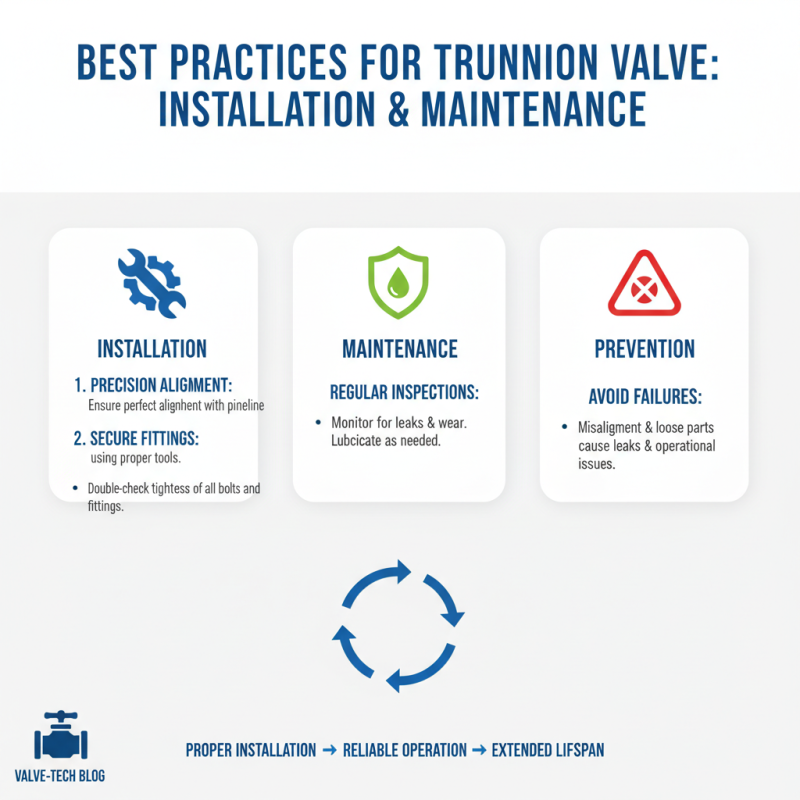
The type of construction can also affect performance. Trunnion mounted valves may encounter issues like wear, particularly in abrasive environments. Regular maintenance is critical in these scenarios, and neglecting it can lead to malfunctions. Different seat materials can enhance durability, but choices often depend on the specific service conditions. Properly assessing these conditions can help in selecting the right valve for your project.
Key Factors to Consider When Selecting a Trunnion Mounted Valve
When selecting a trunnion mounted valve, understanding specific operational needs is vital. Assess the pressure and temperature requirements of your system. These valves handle high pressure well, making them suitable for demanding environments. Always verify the materials used in construction. Corrosion resistance can be essential in certain applications. Different materials offer varying levels of durability.
Another factor to consider is valve size and flow capacity. Ensure the valve matches the pipeline diameter. Mismatched sizes can lead to inefficiencies or failures over time. Evaluate the type of actuation you need as well. Whether hydraulic, electric, or manual, the actuation method should align with operational preferences.
Installation and maintenance accessibility are also crucial. Consider the layout of your pipeline system. A valve that is easy to access will reduce potential downtime. However, be prepared for occasional challenges in field conditions. Finding the right balance between design and practicality can be tricky. Always leave room for adjustments based on real-world operations.
How to Choose the Right Trunnion Mounted Valve for Your Project? - Key Factors to Consider When Selecting a Trunnion Mounted Valve
| Factor |
Description |
Importance Level |
| Medium Compatibility |
Consider the type of medium (liquid or gas) and its chemical properties. |
High |
| Pressure Rating |
Determine the operational pressure of the system to select an appropriate pressure rating for the valve. |
High |
| Temperature Range |
Assess the temperature range to ensure that the materials of the valve can withstand the conditions. |
Medium |
| Size and Flow Rate |
Select a valve size that matches the pipeline and expected flow rates. |
High |
| Actuation Type |
Choose the type of actuator needed based on the application (manual, pneumatic, electric). |
Medium |
| Installation and Maintenance |
Consider the installation requirements and ease of maintenance for ongoing operations. |
Medium |
| Budget |
Determine the budget constraints to ensure the selection is feasible. |
High |
Types of Trunnion Mounted Valves and Their Features
Trunnion mounted valves are crucial in various industrial applications, offering robust design and reliable performance. They are characterized by a trunnion support that stabilizes the valve's ball, reducing wear and tear. This design allows for a higher pressure rating, making them ideal for high-pressure systems. According to recent industry reports, nearly 75% of large-scale operations prefer trunnion mounted valves for their durability and efficiency.
Different types of trunnion mounted valves include ball valves and butterfly valves. Ball valves provide excellent sealing with minimal flow resistance. Their full bore design facilitates high flow rates, often exceeding 5000 PSI in certain applications. Butterfly valves, on the other hand, are favored for their compact design and lightweight nature. They can handle both low and high-pressure applications, making them versatile. However, users must be aware that butterfly valves may suffer from a higher pressure drop compared to ball valves.
Choosing the right type hinges on specific project requirements. Factors like media type, pressure, and temperature play a significant role in decision-making. For instance, corrosive materials require materials like stainless steel or special alloy. Yet, projects can encounter challenges when selecting the appropriate valve size or type. Misjudging these parameters may lead to inefficiencies or premature failure. Balancing cost, performance, and reliability is essential for successful outcomes.
Evaluating Material Compatibility and Pressure Ratings
Selecting the right trunnion mounted valve requires meticulous consideration of material compatibility and pressure ratings. Misjudgments can lead to failures and costly repairs. For instance, using a valve made from carbon steel in a corrosive environment can result in rapid degradation. Always assess the nature of the fluids in your application. Are they abrasive, corrosive, or high-temperature substances? Understanding the media is crucial for durability.
Tips: Always consult with a materials expert. They can help determine the best valve material. Regularly review the compatibility of replacement parts. Not all materials withstand harsh conditions well. Consider running small-scale tests. This might help uncover potential issues before full-scale implementation.
Pressure ratings are another vital factor. Each valve has a maximum allowable working pressure (MAWP). Exceeding this can cause immediate failures. Check your system's operating pressure. Is it close to the valve's maximum rating? This could pose a risk. Ensure safety margins are in place, allowing for unexpected spikes in pressure.
Tips: Use proper monitoring systems to track pressure levels. This helps avert unforeseen failures. Training staff about operating limits is crucial. Misunderstanding these can lead to disastrous outcomes. Regular maintenance checks are essential to ensure valves remain within safe operating conditions.